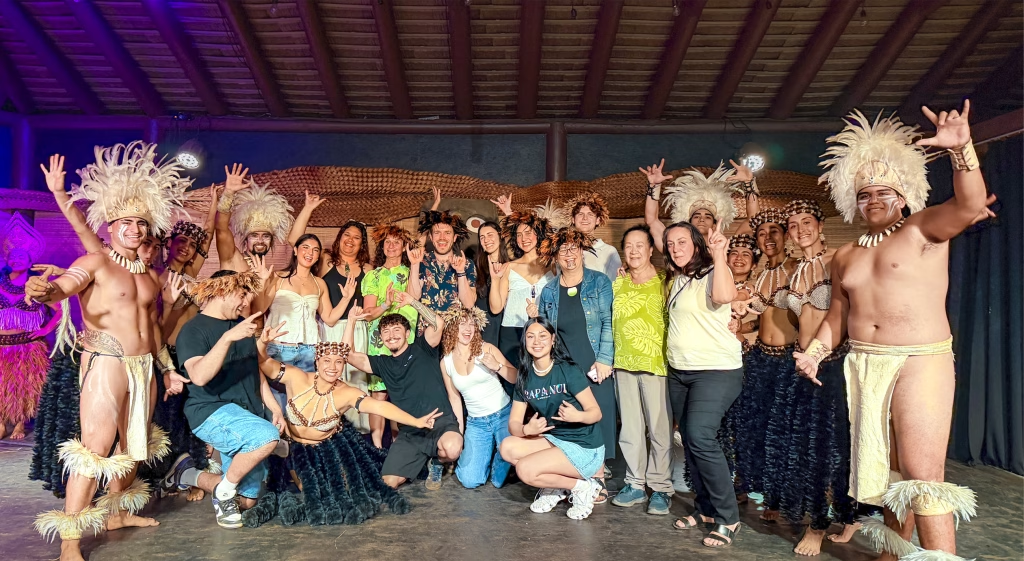
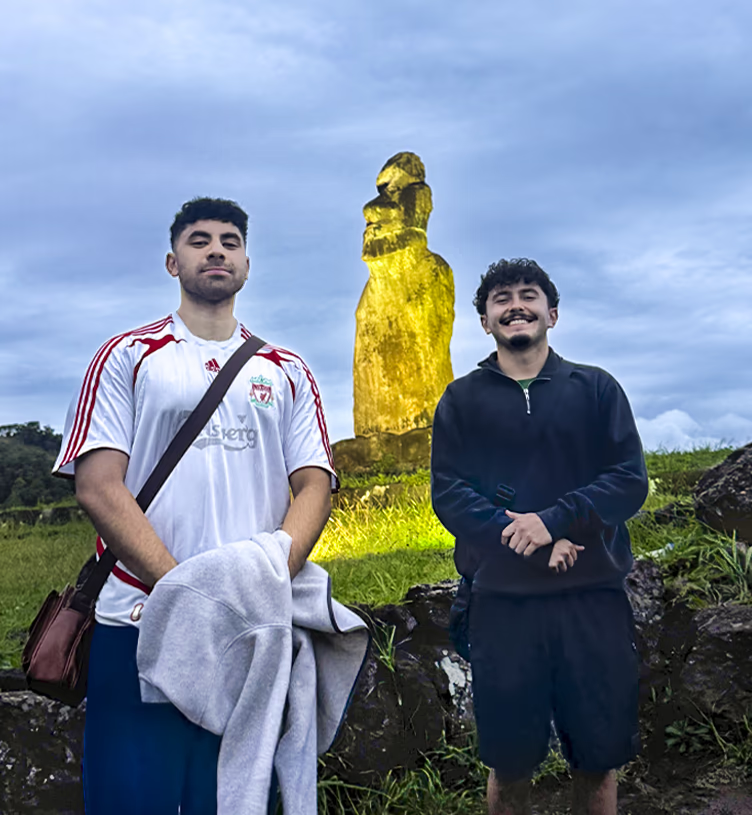
Ōtākou Whakaihu Waka, the University of Otago, has sent a delegation to Rapa Nui which was made possible through the prestigious New Zealand Prime Minister’s Group Scholarship, awarded to support international learning and strengthen relationships across Te Moana Nui a Kiwa. More than a study trip, however, this initiative represents the continuation of a relationship built on trust, reciprocity, and a shared commitment to Indigenous knowledge and community engagement.
The project is led by Dr Moira Fortin, Senior Lecturer at Languages and Cultures, and Dr Esther Willing (Kōhatu – Centre for Hauora Māori), and grew out of a month-long collaboration in Rapa Nui in November 2024. During that time, Otago staff met with local artists, educators, health practitioners, archaeologists, and community leaders, exploring the intersections of performing arts, Indigenous health, cultural heritage, and language revitalisation. The experience demonstrated the value of bringing together diverse knowledge systems and inspired the creation of a broader educational programme for students.
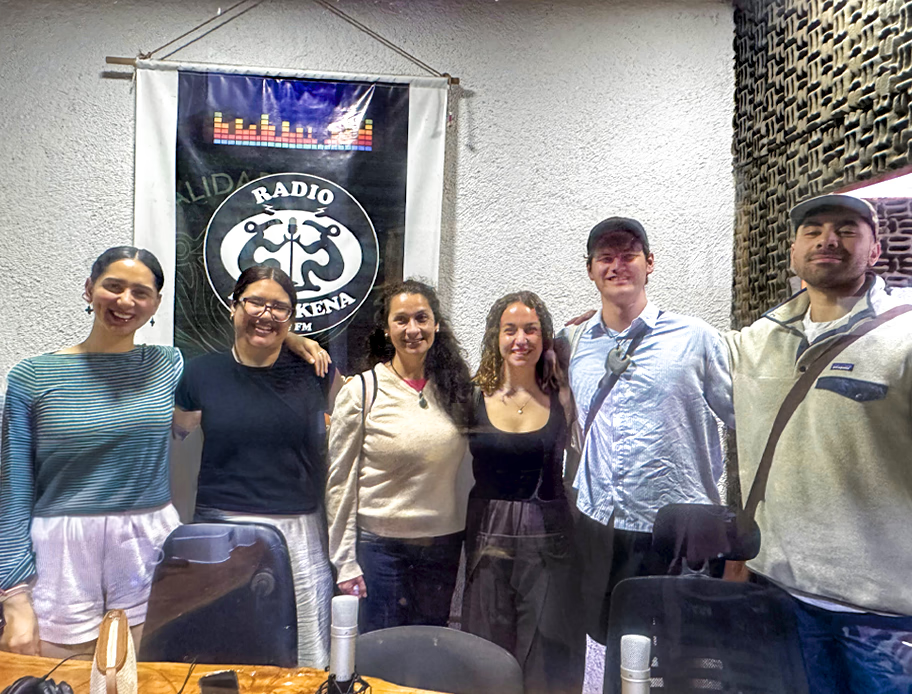
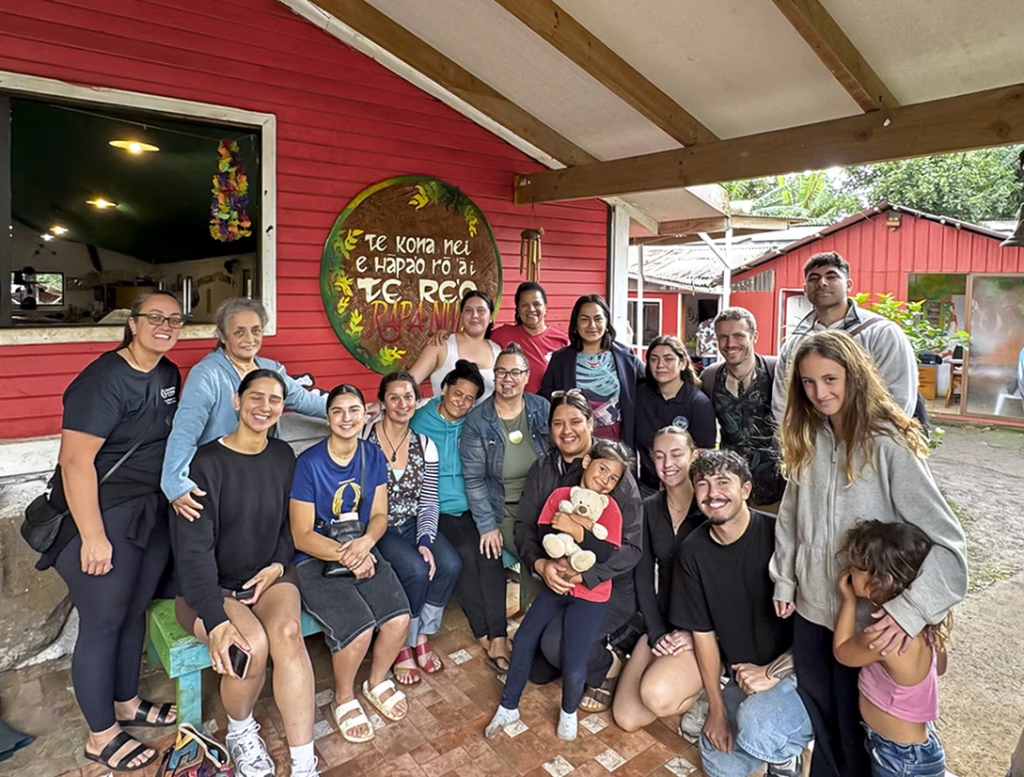
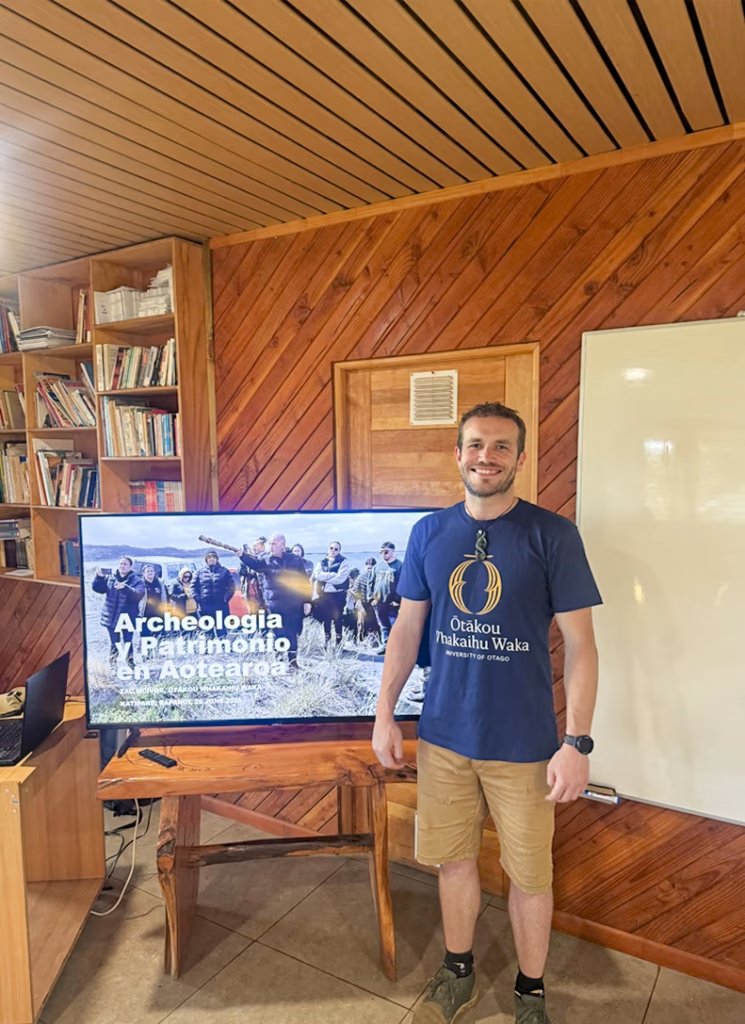
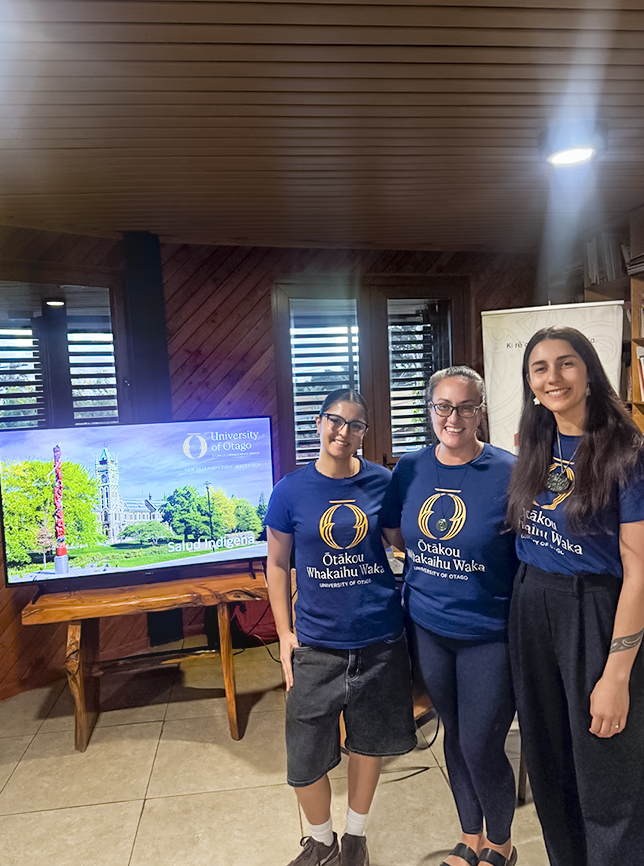
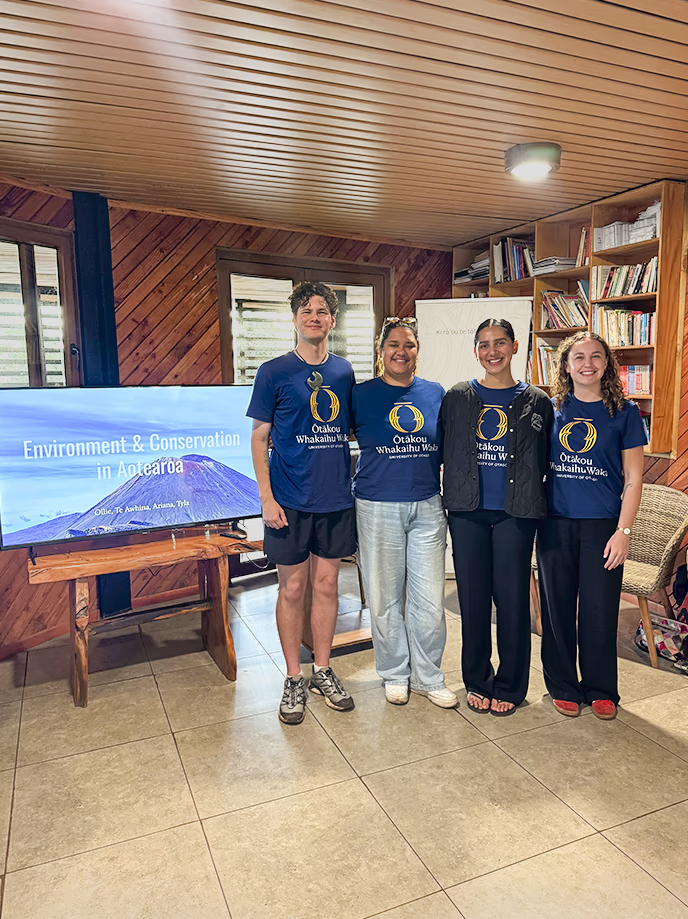
In June 2026, a delegation of eight University of Otago students—supported by four academics representing Languages and Cultures, Hauora Māori, Te Tumu, and Archaeology—travelled to Rapa Nui to continue this collaborative journey. Living with local host families, participating in community activities, and engaging in a series of public conversations and workshops, the delegation sought to learn alongside the rapa nui community rather than simply study it.
At the heart of the programme was the belief that meaningful international education is founded on relationships. By creating opportunities for dialogue between Māori, Rapa Nui, and other Pacific perspectives, the project aimed to strengthen whanaungatanga (relationship building) across Te Moana Nui a Kiwa while fostering enduring partnerships that will continue to benefit both the University of Otago and the rapa nui community.
The students and professors have been learning a lot on this journey and have felt the care from the locals in Rapa Nui. For many of our tauira, it was less about furthering their degrees or research, it was about building connections between whakapapa, tāngata, wairua, and mātauranga (Indigenous knowledge).
Testimonials from the University of Otago Delegation
Pam Conway, Pharmacy student (Honours): “Rapa Nui feels like home. I loved the kindness of strangers who quickly became whānau. Four languages, at times no translator, still we understood each other, laughed together, and made a real connection. I arrived curious, I’ll leave with a full heart.”
Wiremu Ngawati, Physical Education student: “Rapa Nui was an incredibly eye opening experience for me. Seeing how Rapa Nui mātauranga is woven into everyday teaching reinforced the importance of cultural identity in education. The traditional games and competitions still practised today as forms of cultural expression show us how culture can strengthen both hauora (health) and physical activity.”
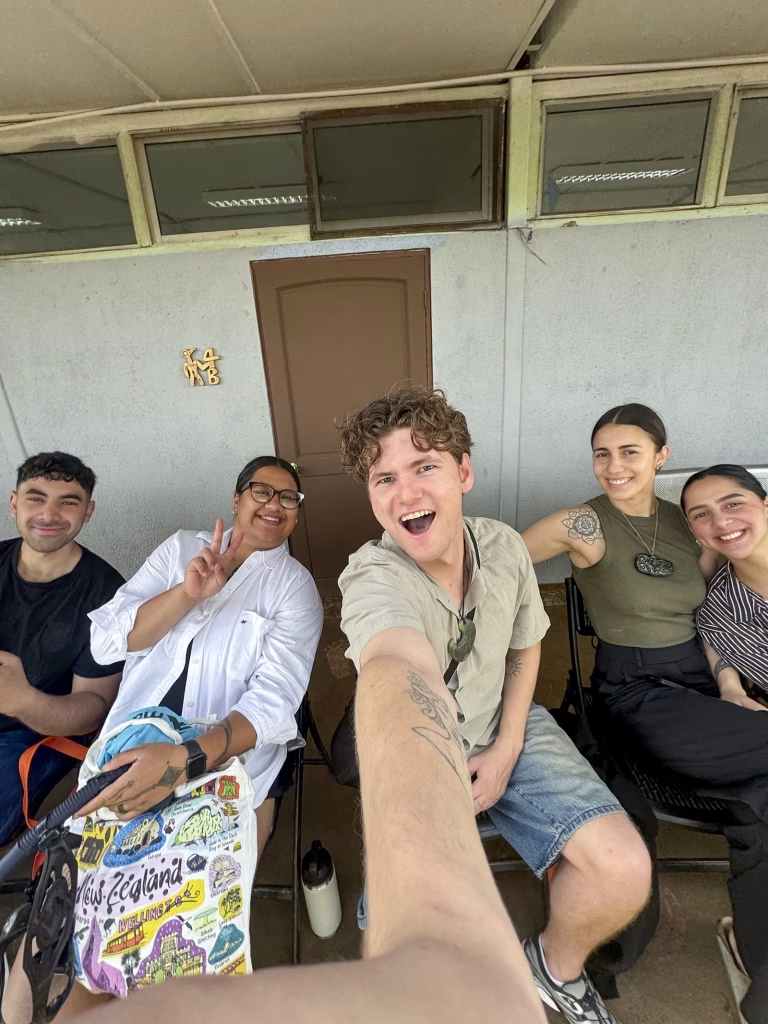
Agustina González, Medical student: “I’m a medical student committed to deepening my understanding of Indigenous health and worldviews. The sharing of knowledge and lived experiences by both groups has strengthened my understanding of the determinants of health for Indigenous groups and will support my journey to providing culturally safe healthcare.”
Sammi Ammar, Physiotherapy student: “I have loved connecting and meeting so many of the amazing people here in Rapa Nui. I have loved connecting with the languages here through conversations with locals and learning about the rich history the island has. I came into this experience with an open mindset to connect with the people here and build onto this and I feel like this has worked really well over my last few weeks here.”
Ariana Davis, student of Law and Indigenous Development: “The first thing I learnt in rapa nui was the meaning of my name. Te reo o ariana is the call of the moa (chicken) after their king dies. This grounded my experience from the very beginning and has been a beautiful way to connect to rapa nui culture.”
Te Puawai Hill-Moana, PhD Candidate in Genetics Mātauranga Māori: One of my favourite koorero was, “We’re one henua separated by vaikava. We’re the same but also different.” Strengthening our hononga is the beautiful outcome of this haerenga. So, what I’ll cherish the most is the haŋa rahi from my whaanau. Kei taku mama raatou ko aku teina, e kore te aroha e mimiti.” whaanau. Kei taku mama raatou ko aku teina, e kore te aroha e mimiti.”
Te Awhina Brundell, master’s student in Peace and Conflict Studies: “This experience has expanded me in the most beautiful of ways. My favourite part has been in the connection between our histories, our stories and our languages. It becomes impossible to deny our shared identity as one people. He hononga tangata tē taea te wetewete. Ko te here o te aroha e mau roa e.”
Ollie Ihaka-Gudsell, student of Law and Indigenous Development: “Nei rā te mihi ki a koutou kātoa e te hāpori Rapa Nui. Every rainy or sunny day, every experience, and every story and connection has been special. My experience has connected me to the people of Rapa Nui and to my own whakapapa. Ki tōku whānau Rapa Nui, whai mai tō taonga, whai mai tō vānanga.”
Dra. Wahineata Smith, senior lecturer of Te Reo Māori : “I am overwhelmed with gratitude to be in Rapa Nui. I feel a deep sense of belonging and connection to Te Pito o Te Henua. I was fortunate to be hosted by a tupuna rapa nui and to learn some rapa nui language, nehe nehe te re’o o te henua nei. ‘Iorana kōrua te ta’ina .”
Dr. Zac McIvor, senior lecturer of Archaeology: “I have been blown away by the hospitality of the rapa nui people. Everyone has been so open and interested to connect and I am very grateful for the new friends I have made. I have learned a lot about the incredible archaeological landscapes here and the significant challenges that face the community.”
Nō reira, «He aha te mea nui o te ao, he tāngata, he tāngata, he tāngata.” What is the most important thing in the world? It is people, it is people, it is people. Māuru-uru e Te Pito o Te Henua, ka kite anō we will see you again.