Mar 2, 2024
The first edition of the Taputapuātea festival in Rapa Nui. Maima Rapu has no words to describe her happiness and gratitude.
CREMATION IN RAPA NUI Cremation is a funerary or post-funerary ritual which allows a cadaver to be disposed of cleanly. The practice dates back at least 20 thousand years among the Australian aborigines and was also customary among neolithic inhabitants of the Middle East and Europe. Among some Asiatic religions,
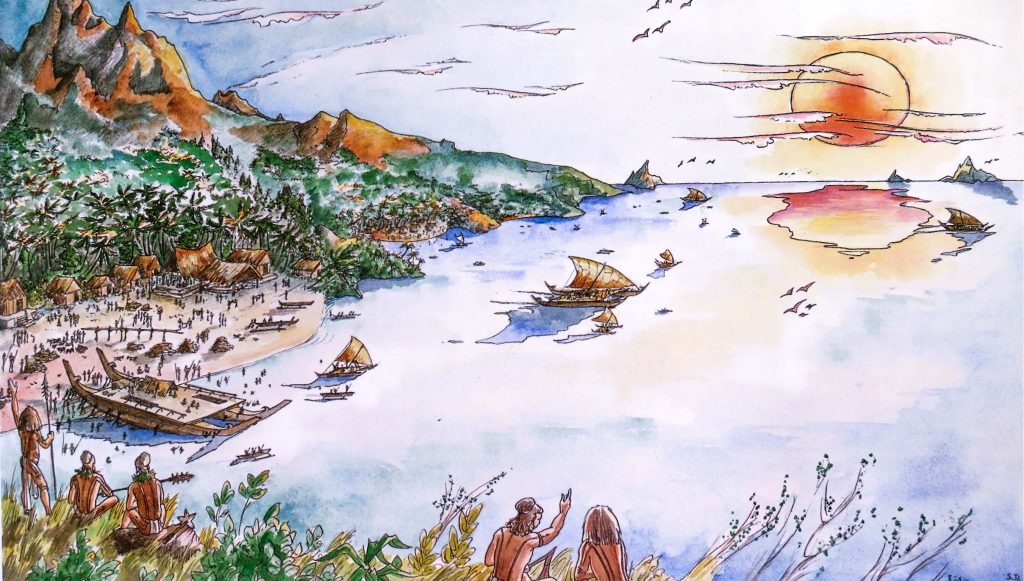
Tonga & Samoa, Cuna y Núcleo de la Expansión Polinésica / Crib and Nucleus of Polynesian Expansion Large migratory waves of Austronesian peoples reached Near Oceania around 3,500 years ago, causing a major cultural impact in the native populations of Papua New Guinea, the Bismarck archipelago and the Solomon Islands.
The Polynesian peoples descend from the creators of the Lapita culture, a group that established itself across a vast oceanic region from Papua New Guinea to Samoa between 3,800 and 3,000 years ago. From that nucleus, their descendants carried out the greatest maritime expansion in human history, colonising the Pacific
In ancient Polynesian cultures, sexuality was not a private or taboo matter — it was a sacred act tied to the regeneration of nature and divine power. Sexual relations, fertility, and virginity carried deep cosmological significance: they were the means by which gods and human beings renewed their alliance to
Kuini Analola Rescuing ancestral navigation in Rapa Nui Myths and legends tell us of the heroic migration of the Polynesians throughout the length and breadth of today’s Polynesia. However, the knowledge of the traditional methods of navigation has been almost lost following the European colonization. Researchers, such as Heyerdahl and