
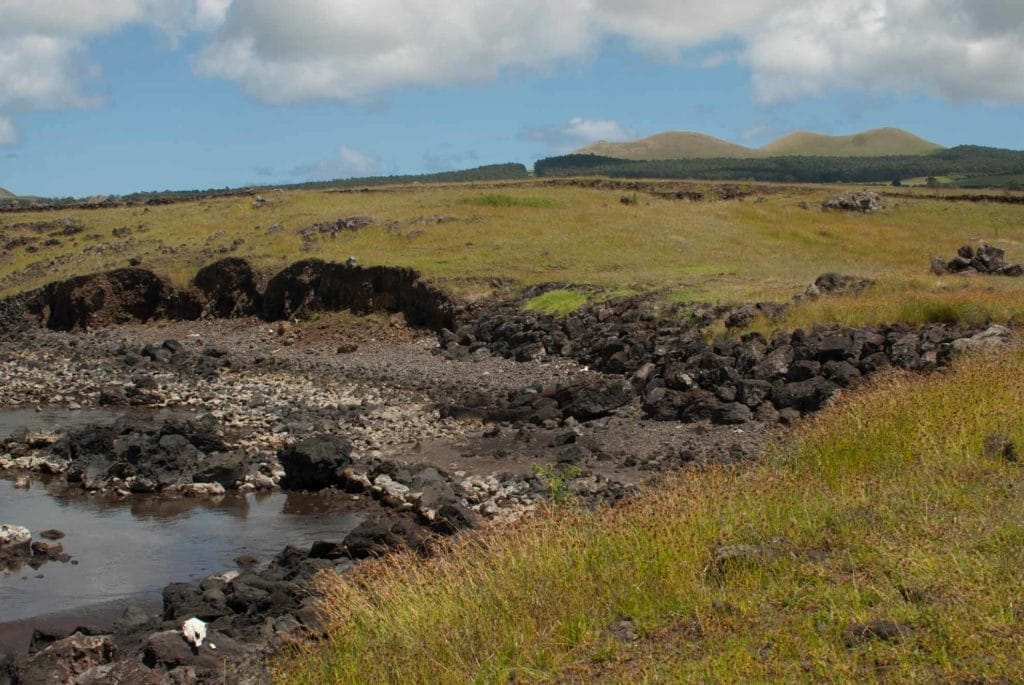
Vaihu is a small fishing harbor on the southeastern coast in which there is a large cistern in the form of a double slope. The lateral wall, which in the past defended the fresh water from sea water intrusion, is today totally crumbled.
Ahu Hanga Te’e: Architecture and Moai
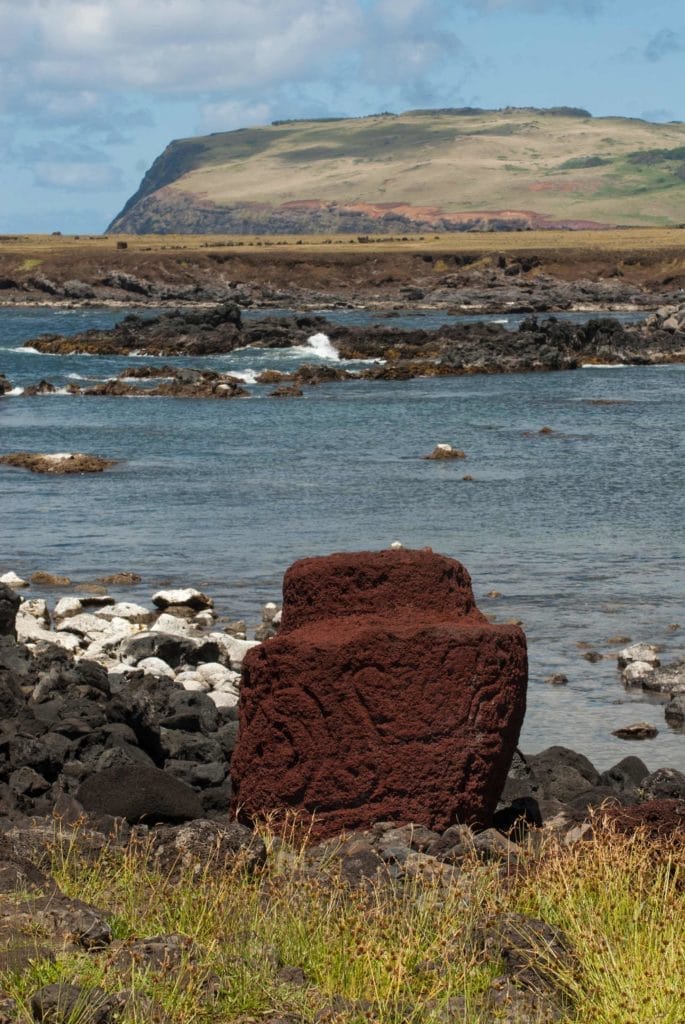
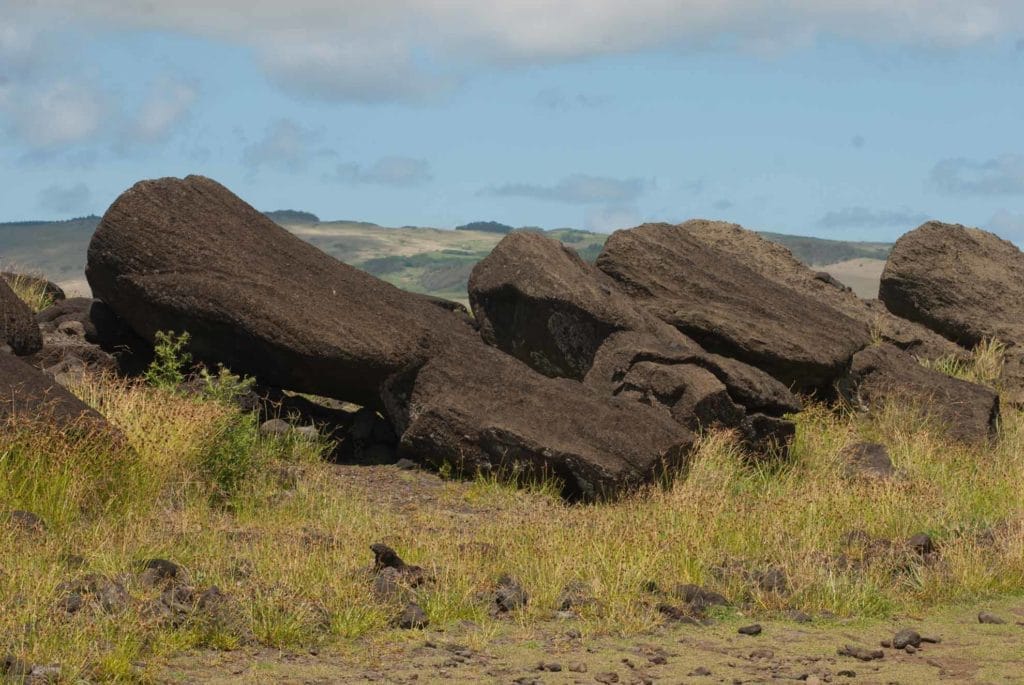
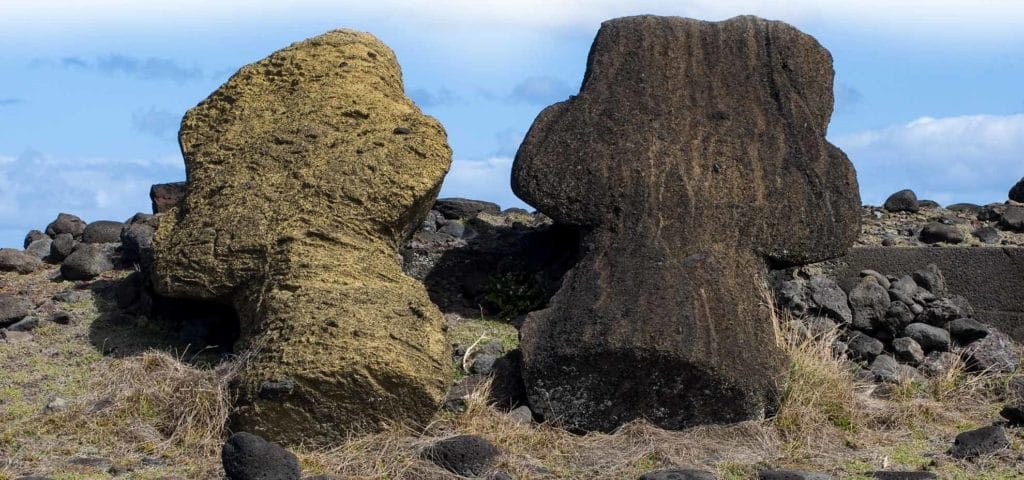
The Ahu (platform) of the Vaihu sector is called Ahu Hanga Tee. It is 74 meters (242 feet) long and 4 meters (13 feet) wide with walls made of worked stone. It is one of the most complete Ahu-Moai complexes with 8 Moai (statues) and their Pukao (headdresses) scattered and, in some places, broken.
The Ceremonial Village: Elite and the Paina Ritual
In front of the Ahu are the remains of a village. Ethnographic notes indicate that these residences were occupied by an elite made up of high ranking people from the major lineages of each territory, representing socio-political power and associated with ceremonial activities, such as the Paina, which was held in the circular plazas in front of the Ahu-Moai.



Location and How to Get There
Vaihū is part of Rapa Nui’s south coast archaeological route, located between Vinapu and Ahu Tonariki — two of the island’s most visited sites. Its location makes it easy to include in a day-long tour of the main Ahu along the southeastern coast.
Frequently Asked Questions About Vaihū
What is Ahu Hanga Te’e?
It is the main Ahu of the Vaihū sector, 74 meters long, with walls of worked stone and 8 fallen Moai alongside their Pukao, some of them broken. It is recognized by the red slag border along its podium.
What was the function of the village in front of the Ahu?
According to ethnographic records, it was inhabited by a high-ranking elite from the major lineages of each territory, linked to socio-political power and ceremonies such as the Paina, held in the circular plazas in front of the Ahu-Moai.
Where is Vaihū located relative to other archaeological sites?
It is located on Rapa Nui’s southeastern coast, between the sites of Vinapu and Ahu Tonariki, forming part of the archaeological route through that area of the island.