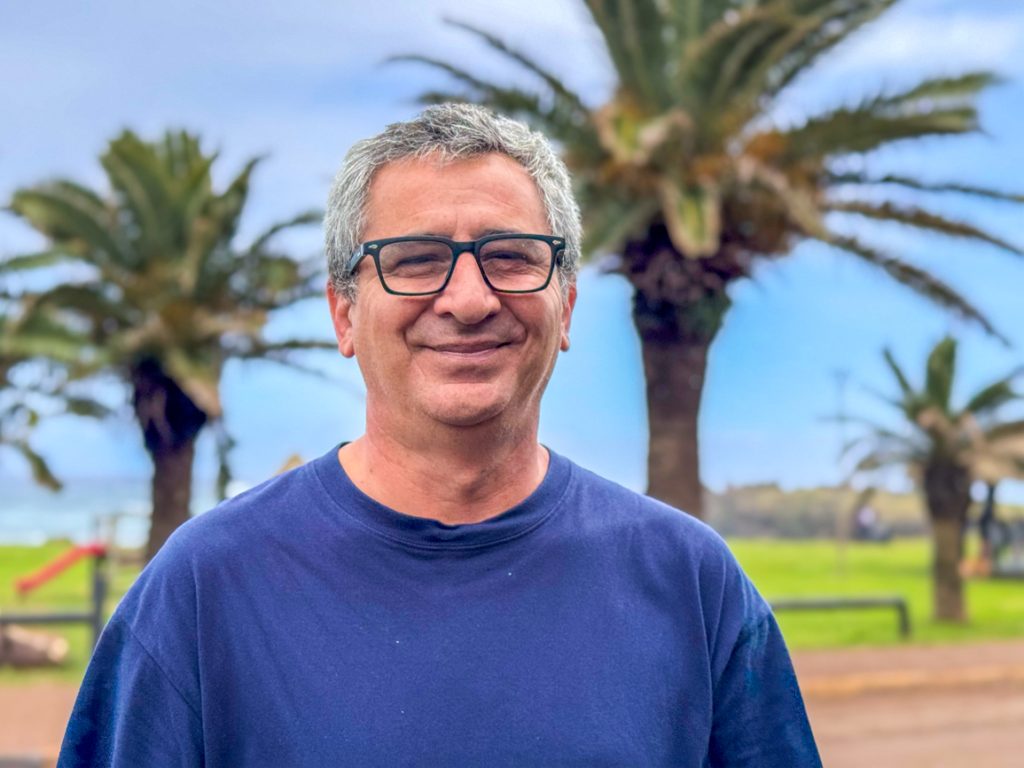
By Consuelo Martínez
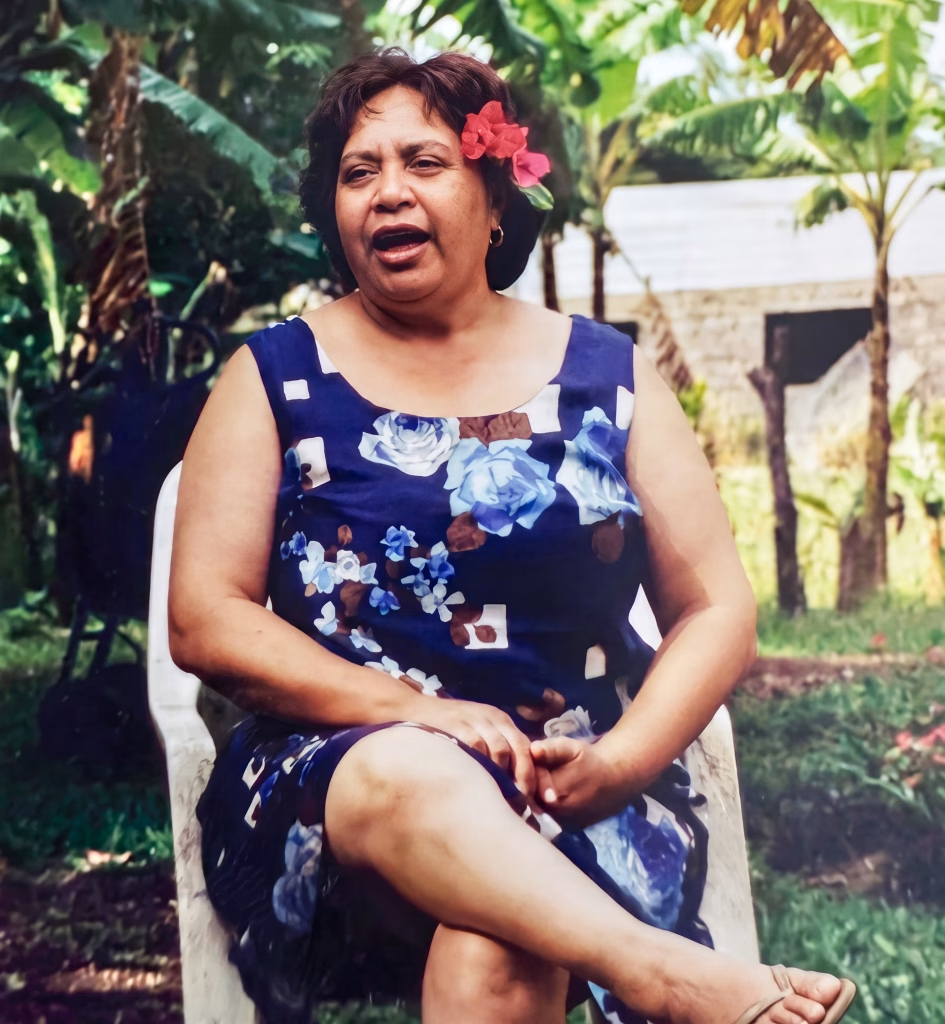
On the same day of the funeral, arrived a young priest, whom Rosa had met during her years as a devoted traveler. He flew in just to officiate the Mass and left the next day. “The Mass didn’t feel like Mass, it felt like a stand-up comedy”, her son recalls: the priest told, one after another, the anecdotes he had shared with “a woman with a very special personality, quite tough, but incredibly kind.” People laughed through their tears. She herself preempted any praise while she was alive: “I am not a human treasure,” she would say, and Francisco Haoa Hotus still quotes her as if he were hearing her. It was the most faithful farewell for someone who never tolerated empty solemnity.
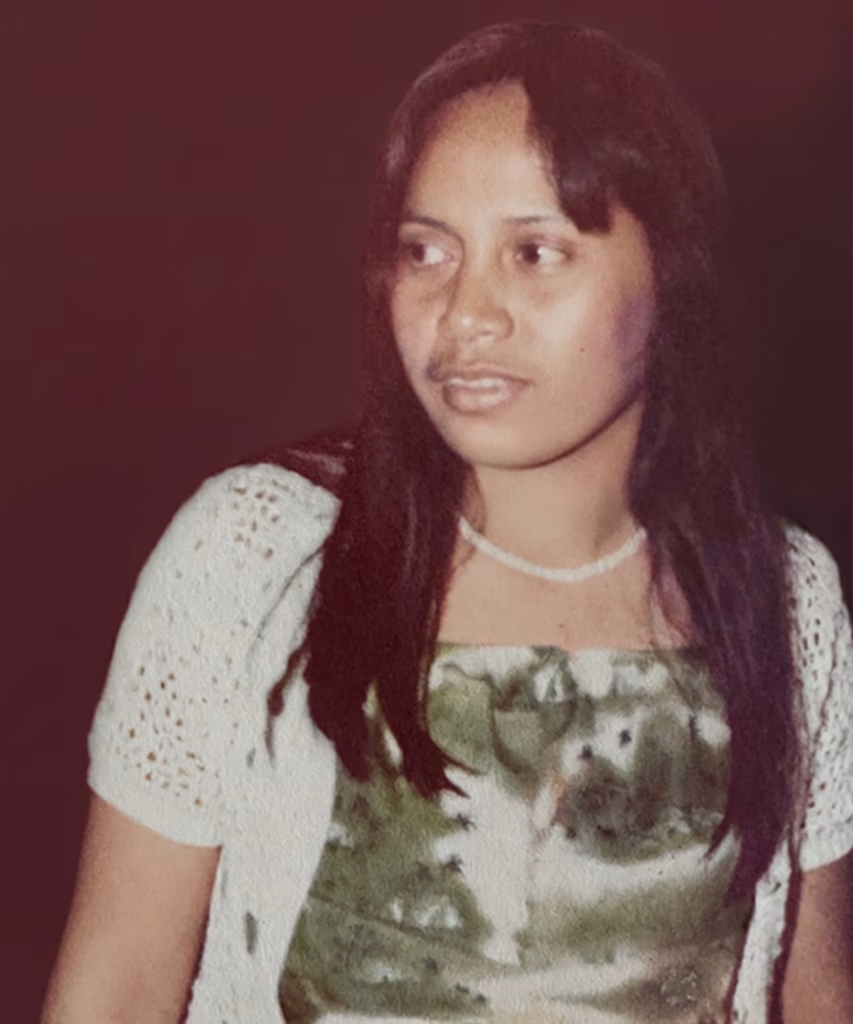
Rosa was born on August 30th, 1952, in the family home near the church. She was one of the six children of Lázaro Hotus Ika and Lidia Tuki Make. She first visited Rano Kau when she was twelve years old, as access was restricted at the time. Years later, she would come to know Anakena and other corners of the island. “She lived through the time when the village was still a ghetto,” Francisco recounts.
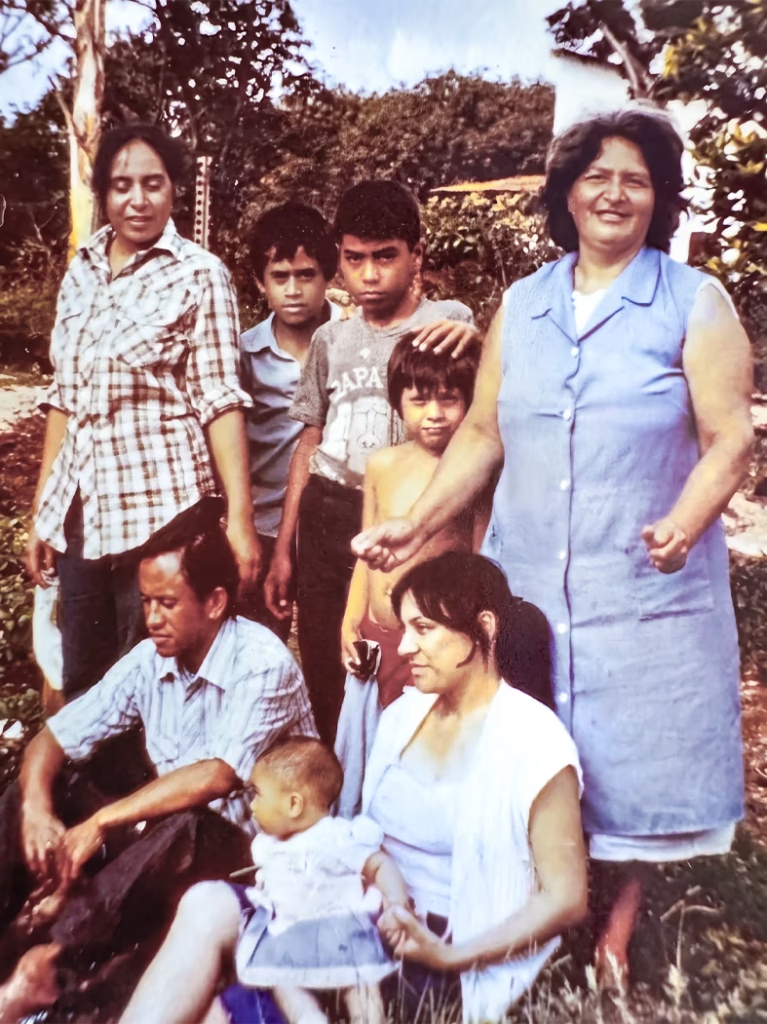
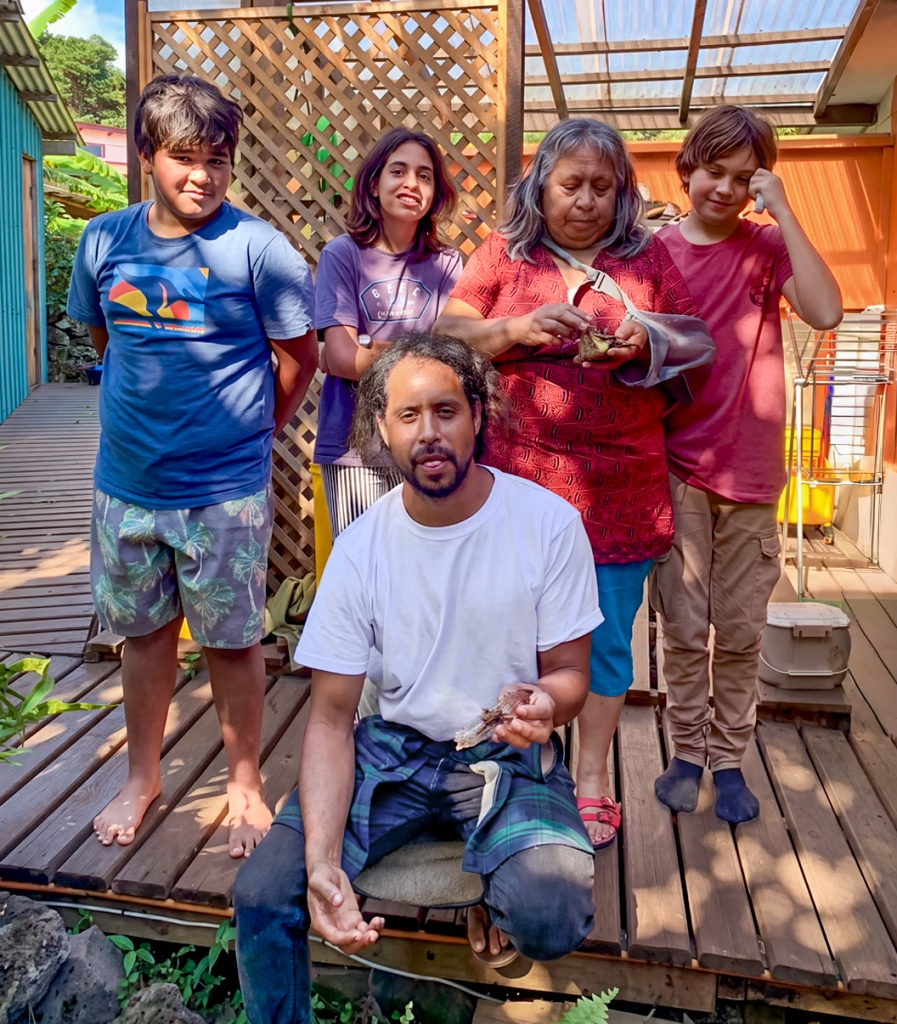
From her father, Rosa inherited a lifelong admiration and also his temperament. Lázaro was twenty-two years old when he hid, along with other rapa nui, in the hold of a Navy ship. Between barrels he stayed for three days without food, until they were discovered. Without documents, “at that time they weren’t considered citizens, and under suspicion of leprosy, he spent his first days in Valparaíso under observation; later he lived in a military barrack until a man from Quilpué, Federico Felbermayer, began to help them. When they tried to send him back, he escaped again. My grandfather was always a wanderer,” his grandson recounts today. Felbermayer, an Austrian agronomist and archaeologist, who was one of the founders of the Society of Friends of Easter Island, a civil organization created to improve the living conditions of its inhabitants, then in a state of great neglect by the government. Returned in 1950 with the island’s first beehives: “It’s usually attributed to the missionaries, but he brought the bees.”
Years later, when the explorer Thor Heyerdahl asked him if anyone still possessed the ancient knowledge to raise the moai, Lázaro replied yes. “The technique wasn’t some sacred secret, just pure leverage,” the same he had learned as a laborer in Valparaíso. “More than my mother’s story, it’s a story of resilience that begins with my grandfather and continues with her,” Francisco summarizes.
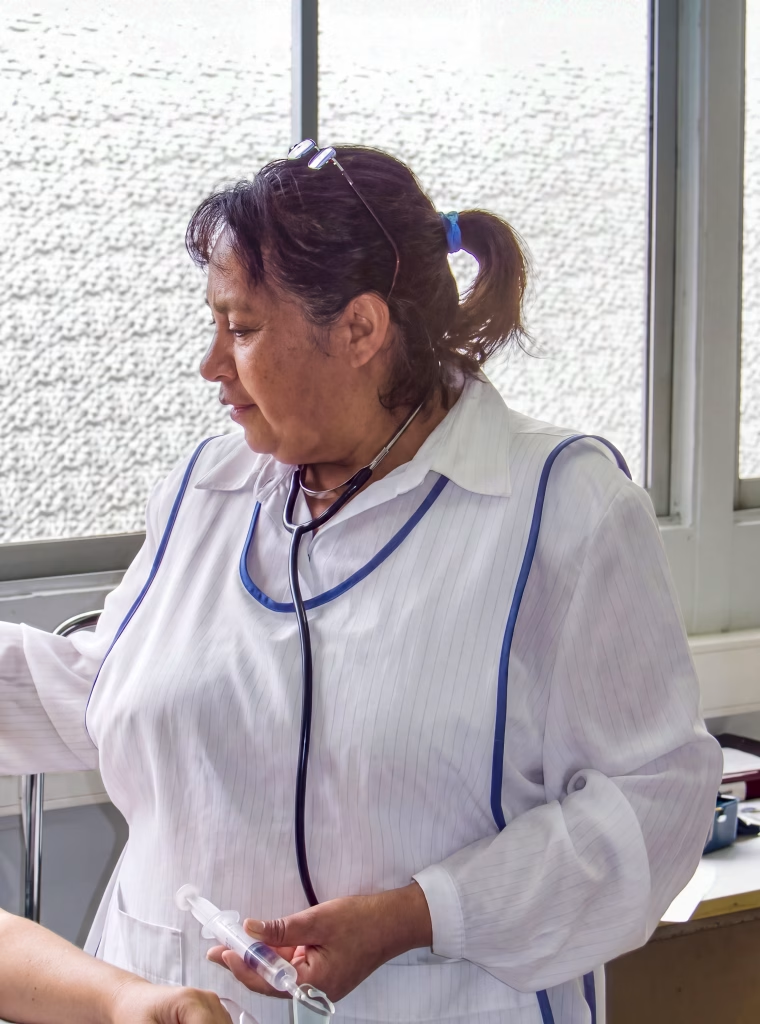
Francisco was ten years old when he started spending his afternoons at the hospital where his father worked. “The children were brought in to work for free, washing dishes. I am of the hospital family. I was terrified of walking past the morgue, but there was sweetness too: the leftover bits of jelly from large trays for the patients, the movies in the auditorium. It was a very happy time,” Francisco recounts.
In 1992, Rosa was 40 years old when she started working at the hospital as a cleaner. “When I was 16, a nurse came to the hospital to give a first aid course. My mother liked it and wanted to get certified because that course didn’t qualify her to work at the hospital. She hadn’t even finished high school, but she wanted to rise in life”. At the age of forty-two, she went to study nursing technician on the mainland, against her husband’s will. “Keep the kids, I’m leaving,” she told him. She lived alone, renting a room near the Van Buren Hospital, very poor, without even enough money for a calculator. She couldn’t read well, but she passed her exams through sheer effort. With her first paycheck, she financed Francisco’s studies, who was living on the mainland at the time. Back on the island, without a formal position at the hospital, a woman took her under her wing. “Rosa, come here, I’ll help you and guide you,” Francisco recalls.
At the hospital, Rosa climbed the ladder through sheer beginner’s mistakes: “Your mother was terrible at giving injections,” it was told, until she became the first person everyone called. She didn’t have many soft skills, according to Francisco: she scolded, demanded, and spoke her mind. But behind that toughness there was an almost clandestine generosity. At the funeral, someone approached to thank her for something the family didn’t know: that Rosa would take salbutamol from the hospital to give to an asthmatic child who had no way of getting it and would go to people’s homes to give injections after hours.
She was a devout Catholic, “she never missed a prayer or someone else’s funeral. She didn’t compromise on God,” says Francisco. That group took her to Pucón, to Italy. After retiring, she reinvented herself: she took a painting workshop, participated in the Tātara ‘Ā’amu Reading and Writing Club, took English and photography workshops and even started a Facebook page. “She wrote very basic stories, written with the same dedication as always. That’s what I highlight about her: that she didn’t care about other people’s opinion. Even if they laughed, she wouldn’t compromise on that,” Francisco says proudly.
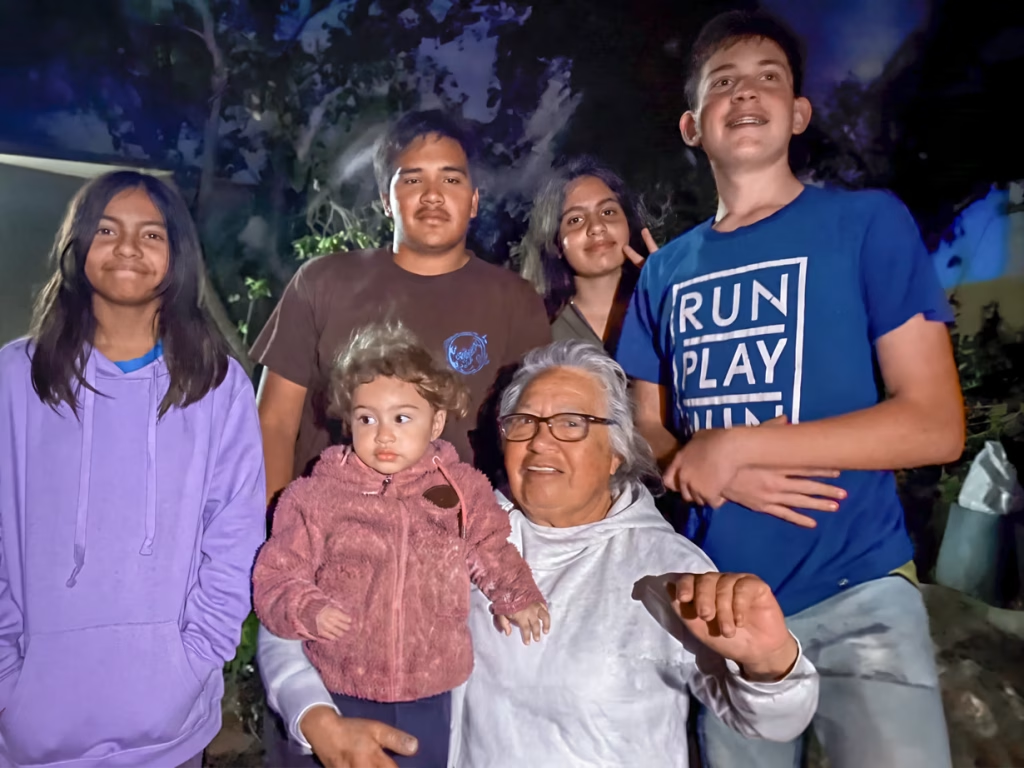
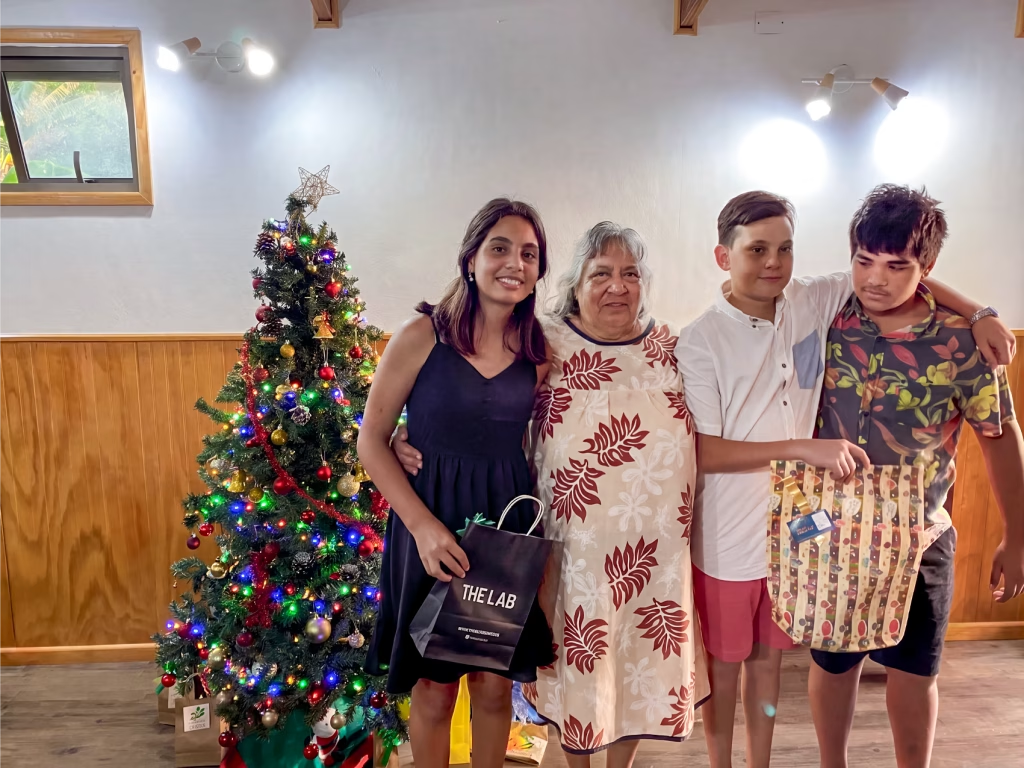
Until her last days, she continued going to her land farm to pick avocados and lemons to sell next to the pharmacy. “My mom goes there because she likes it,” Francisco would reply to anyone who suggested she needed help. “She didn’t work out of necessity; she didn’t want to sit around. She liked to be active, to feel useful, and to socialize.”
Her last weeks were of pain. She traveled to the mainland already seriously ill, with a cancer that developed into a multisystemic condition. Francisco remembers that she herself, with the lucidity of someone who had worked her whole life in a hospital, said that she didn’t want to live bedridden, dependent on others. “It wasn’t just any death. Her faith accompanied her to the end,” Francisco recounts.
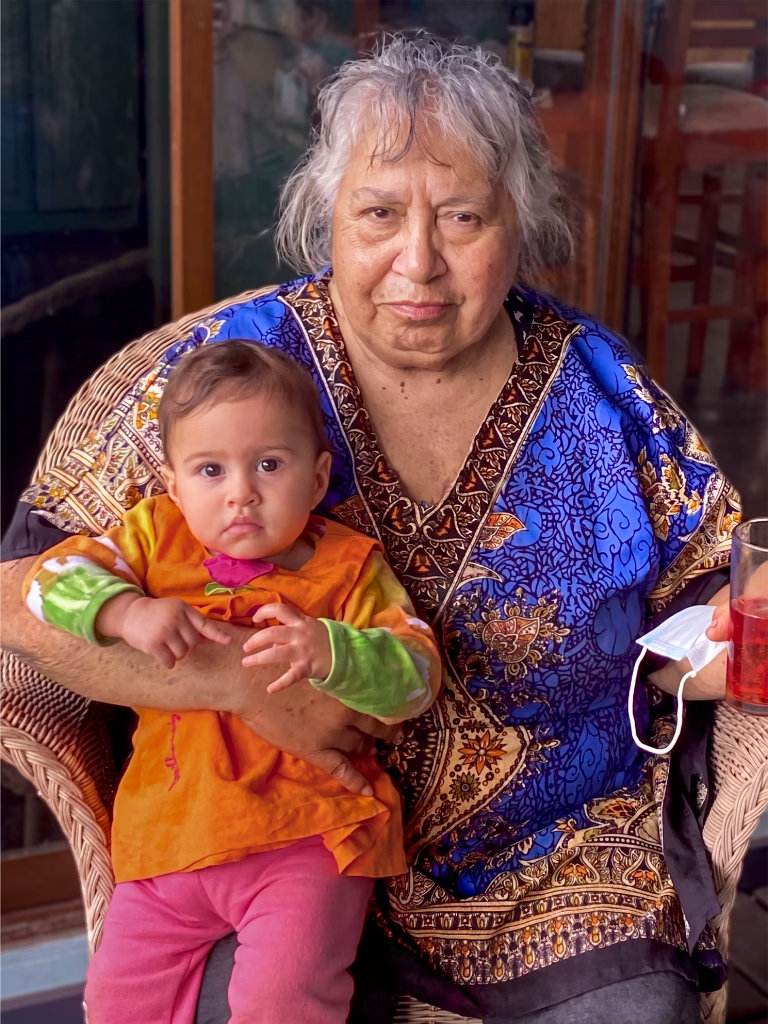
It remains Mrs. Rosa from the stall next to the pharmacy, the one who responded to any emergency call without looking at the time, the one who made people laugh at her own funeral. She never sought to be remembered; simply being present was enough for her. And in that everyday presence, she sustained the entire life of a family and a community. There are women to whom no official history reserves a place, and yet they hold up the world with calloused hands and a harsh voice. Rosa Hotus Tuki was one of them.
Stories written by Rosa for the Tātara ‘Ā’amu Reading and Writing Club
instagram @leamosrapanui
THE WOMEN OF RAPA NUI
‘ŌHEHOOOO! (It’s a shout of energy, of love).
Greetings to the women of this territory that is Rapa Nui.
Us all, the women, are the ones who lead our families.That’s why, we must look to the sky and thank God.
Our island is in the middle of the sea. Rapa nui women, are very capable to wage war at the time of working.
And they never lack work: cooking, taking care of the children, taking them to the hospital, to their classes, going to the fields, going to the sea and collecting seashells, run around during the TĀPATI RAPA NUI to sing, to dance with their hearts, with commitment… Let’s move forward!!!
December 2023.
HAPPY TO BE A RAPA-NUI WOMAN
I thank the Lord for having been born here on Rapa Nui, or Easter Island.I will never change my position of my homeland. Long live the life that God gives us; accepting is a gift. To be a woman, to be a wife, to be a mother of four children, three princes and one princess, grandmother of six grandchildren, two boys and four little princesses… what more could I want in life, I have it all in the palm of my hands. Life is so beautiful, the road is long, every day, is sacrifice, the law of life is continuation, IORANA Women of Rapa Nui. GOD BLESS YOU.
MAURU-URU.