
AVA RANGA UKA A TOROKE HAU
German Archaeological Excavation (2nd Stage)
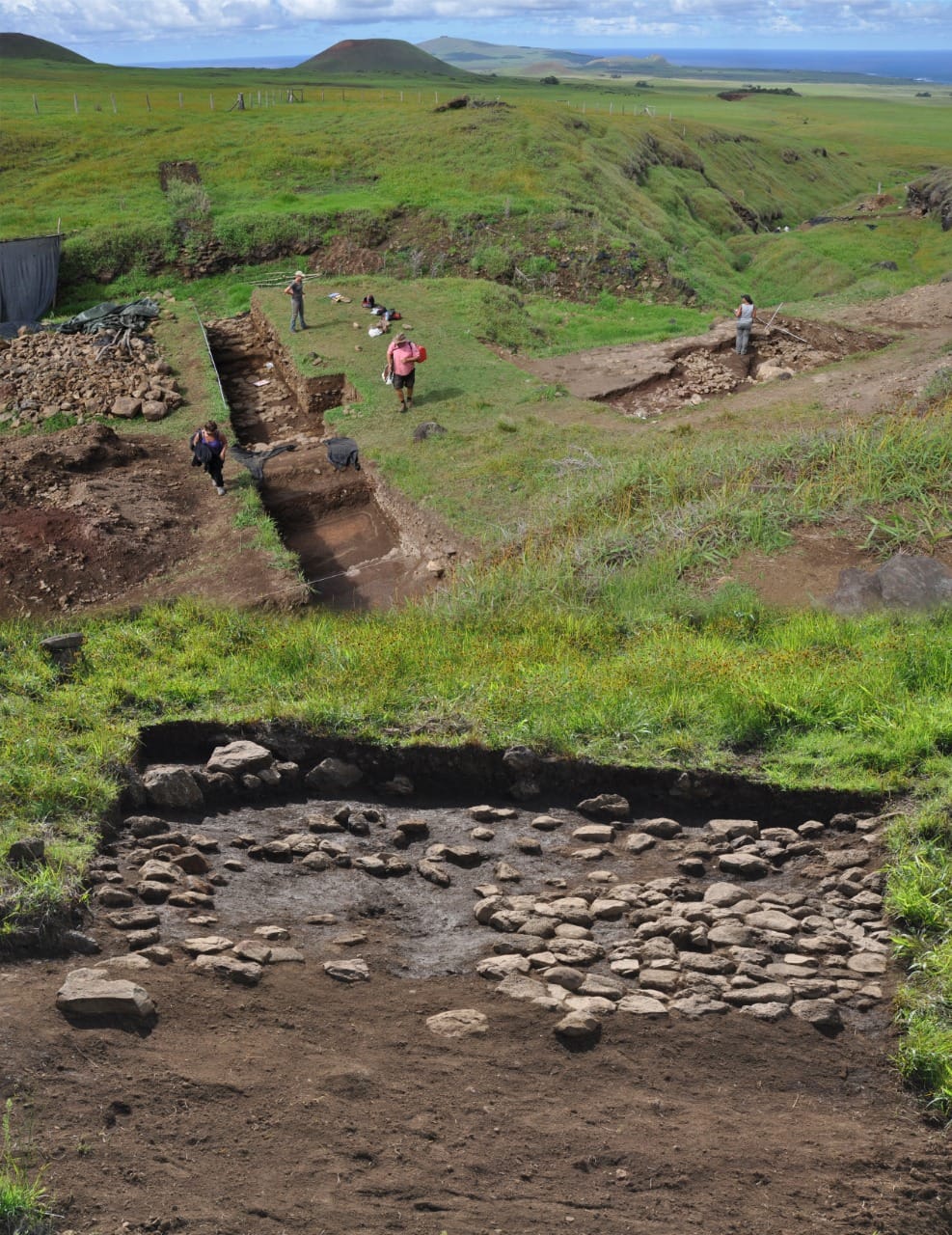
New studies are being done by the German and Swiss archaeological team, together with the Anthropological Museum and the Mata Ki Te Rangi Foundation of Rapa Nui, at Ava Ranga Uka a Toroke Hau near Vaitea (located in the center of the Island). The current work is a continuation of that begun with the first excavation in 2008, to study how fresh water was obtained in this sector in the period of the 15th and 16th centuries, before European contact. According to the Director of the German Archaeological Institute in charge of the work, Dr. Burkhard Vogt : “Water is a vital element and this is the first research that has been done about this important resource on Easter Island. Without water, nobody can survive.” There is much bibliographic evidence that in the pre-European period (15th and 16th Centuries) the inhabitants lived along the entire coastline. However, there are indications that people also settled inland in the area around Vaitea. During the studies that have been made over these several years (2008-2011) there have been many discoveries : two cofferdams to retain water in the gully of Vaihu; petroglyphs; a well; a platform with a “moai” (statue) called Ahu Hanuanuamea, or Rainbow Ahu; remains of houses; and a pavement; all built in the 15th and 16th centuries. Studies have shown that the water was not used for agricultural purposes, as until now no irrigation system has been found and it seems that there is no evidence of agriculture in the immediate area. Work will continue for at least five more years (until 2016). The scientists hope to better interpret and understand the discoveries already made and those to come in the future.

